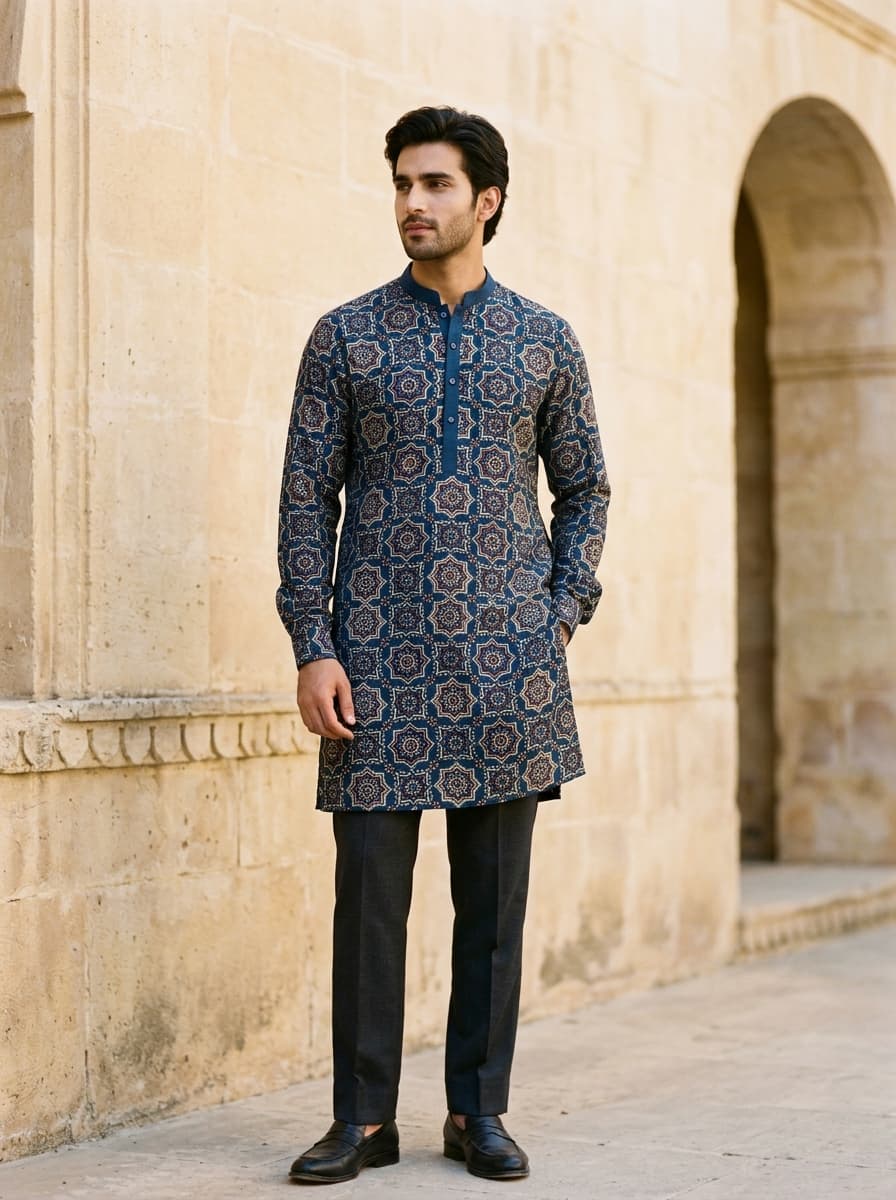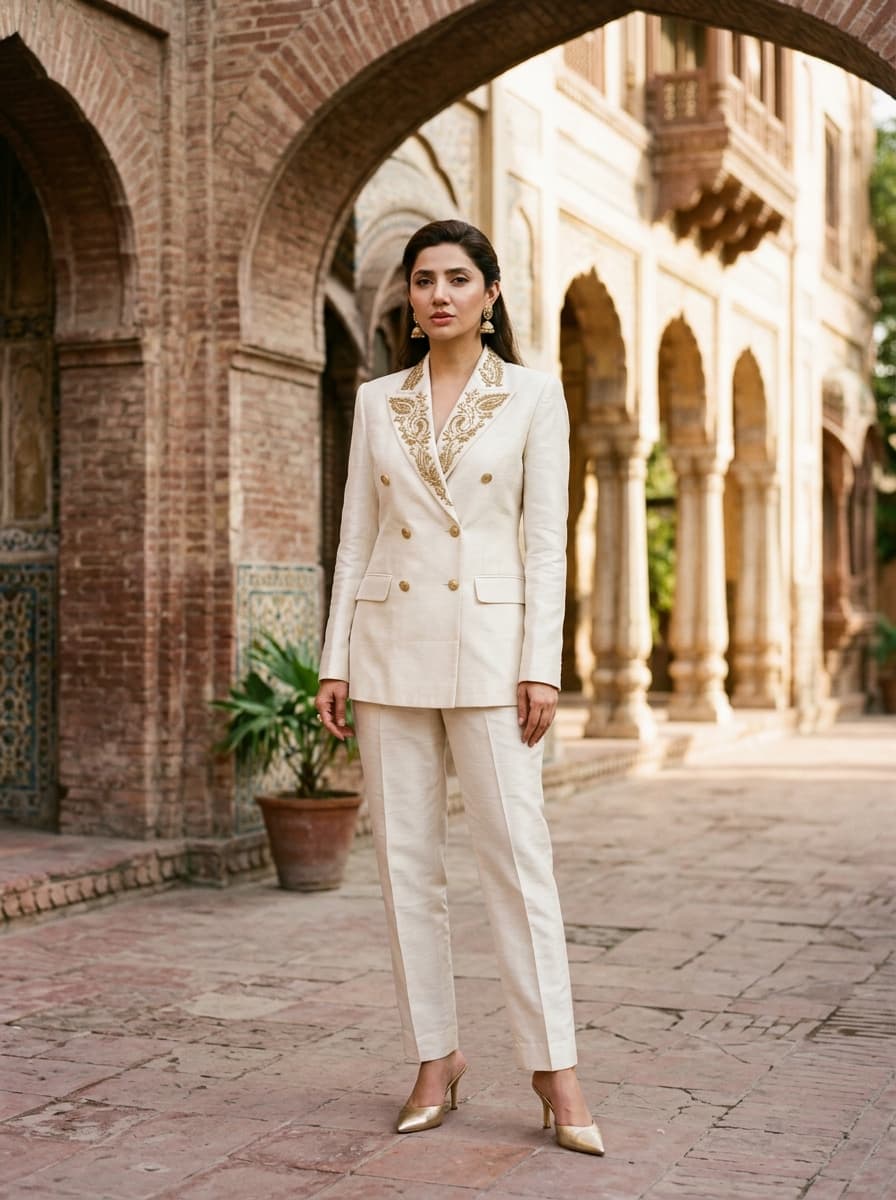
01 ICH REG. SINDH BLK-049
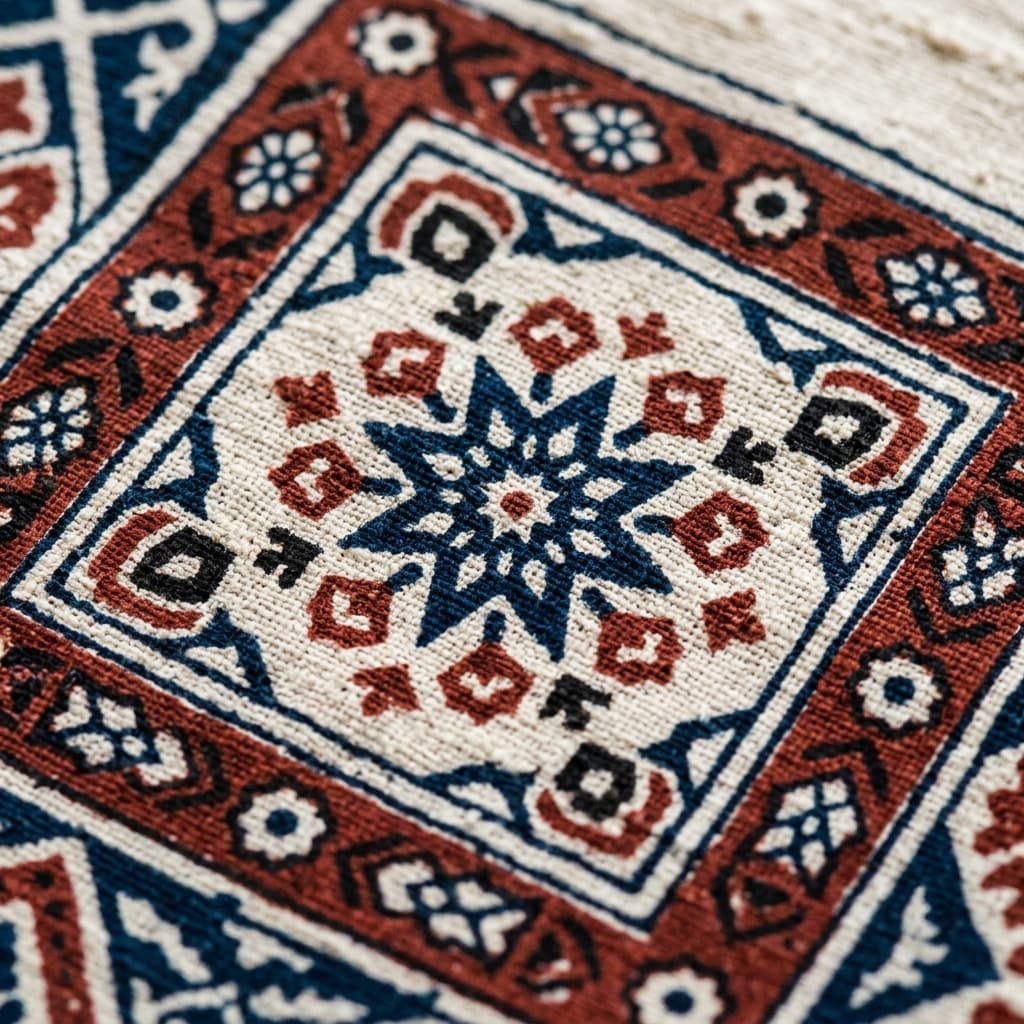
Sindhi Ajrak
The 14-Stage Natural Vat Dyeing
A mathematical and astronomical block printing discipline that utilizes organic dyes, alluvial river mud, and hand-carved acacia wood blocks.
Documented in the National Register of the Intangible Cultural Heritage of Pakistan under regional traditional textile disciplines.
- Province
- Sindh
- Origin
- Bhit Shah & Matiari
- Register
- SINDH BLK-049
- Atelier
- Bhit Shah Atelier, Sindh
(01) Provenance
Originating along the Indus River basin, Ajrak is not merely ornamental textile; it is an astronomical calendar and philosophical discipline. The geometric grid represents cosmic harmony, while the blue and red symbolize sky and earth. True Ajrak contains zero synthetic chemicals, relying entirely on microbial vat fermentation.
(02) The process
The hand,in stages
- 01
KhurrInitial Washing & Camel Dung Steeping
Raw unbleached cotton is soaked with camel dung, castor oil, and soda ash to strip raw starches and soften cotton fibers.
Materials Natural alkaline water, organic castor oil
- 02
PorhBlock Printing the White Outlines
Master block carvers stamp the primary geometric outlines using a resist paste made of river gum and rice paste.
Materials Acacia arabica carved woodblock, rice starch resist
- 03
NillNatural Indigo Vat Fermentation
The cloth is submerged into ground vats where Indigofera tinctoria leaves ferment over 18 days, oxidizing into deep blue upon contact with air.
Materials Natural indigo cakes, lime, fermented dates
- 04
MajeethaAlizarin & Madder Root Boil
Boiled in large copper cauldrons with crushed madder roots and tamarind seed flowers to transform earthy mud resists into rich rust terracotta.
Materials Rubia cordifolia (Madder root), copper vat
(03) Master atelier voices
Translated into fashionCipher 03 — Ajrak “When the river rises, the water changes our blue. You cannot hurry an indigo vat; you listen to its breath.”
Master Ustad Khatri & Generational Dye MastersBhit Shah Atelier, Sindh
(04) Craft translations
All works Worn inthe house
Form 01 — Noor