Vat Fermentation & The River
Inside the 14 Stages of Sindhi Ajrak
Following master block-printers along the Lower Indus basin as they invoke clay, indigo, and mineral waters.
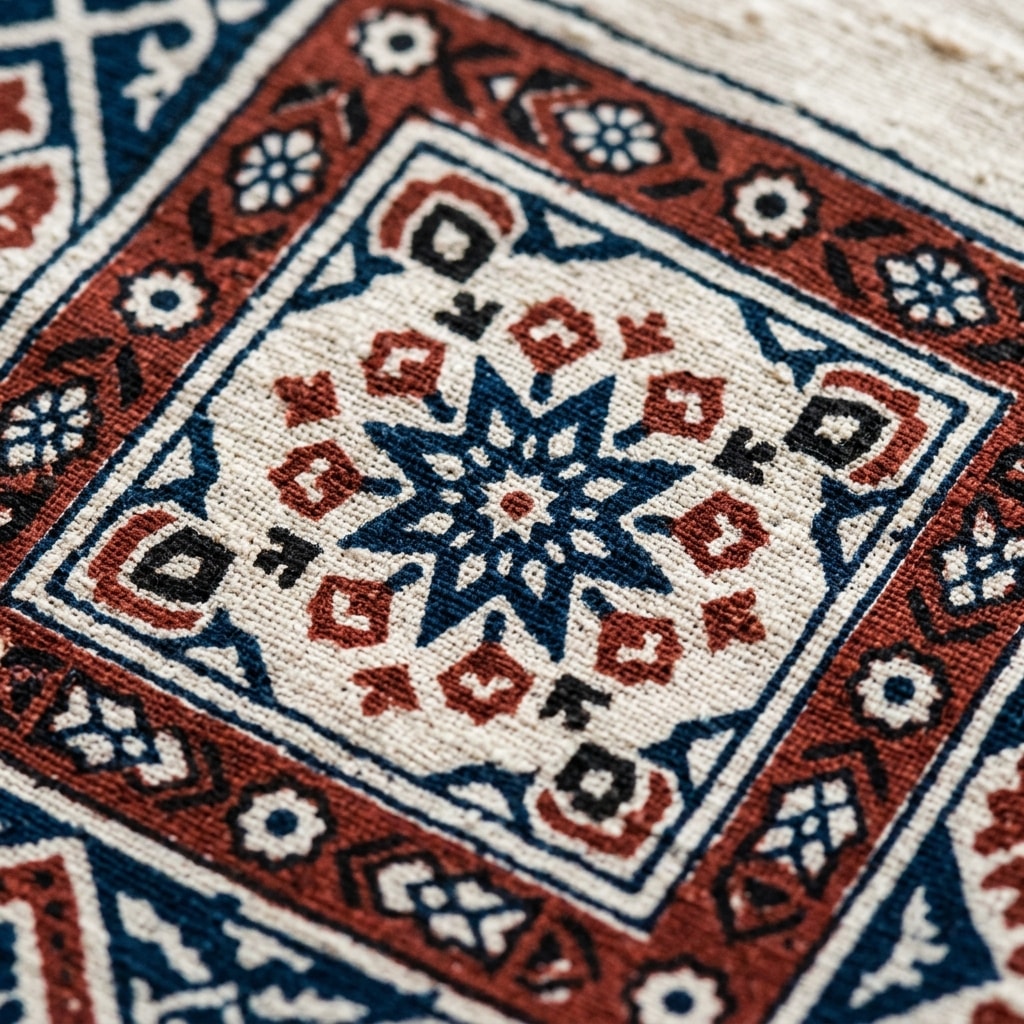
An archival exploration into the ancient riverbed clay, indigo vats, and generational block carvers of Sindh documented in the National Register.
“The river is not a water source; it is a co-author. Without its specific mineral salinity, the madder root refuses its crimson soul.”
Ustad Ghulam Rasool, 6th Generation Master Printer
I. Khumb: The Steam of Cleansing
The journey of authentic Ajrak begins not with color, but with fire and water. In the village of Bhit Shah, raw unbleached cotton is coiled over a copper cauldron known as the Khumb.
For seventy-two hours, continuous steam permeates the fibers, loosening natural pectin and seed husks. Only when the fabric achieves total softness can it drink the river.
II. Saaj & The Carved Acacia
Every wooden block (pore) is hand-chiseled from mature Acacia nilotica (Babul) wood by carvers whose families have calibrated compass points for three centuries. The geometric tessellations reflect astronomical charts and Quranic architectural geometry.
The printer works without rulers or guidelines. His hand registers the wood against the damp textile by tactile muscle memory alone, striking the wood twice with the heel of his palm to imprint the Kiryana resist paste.
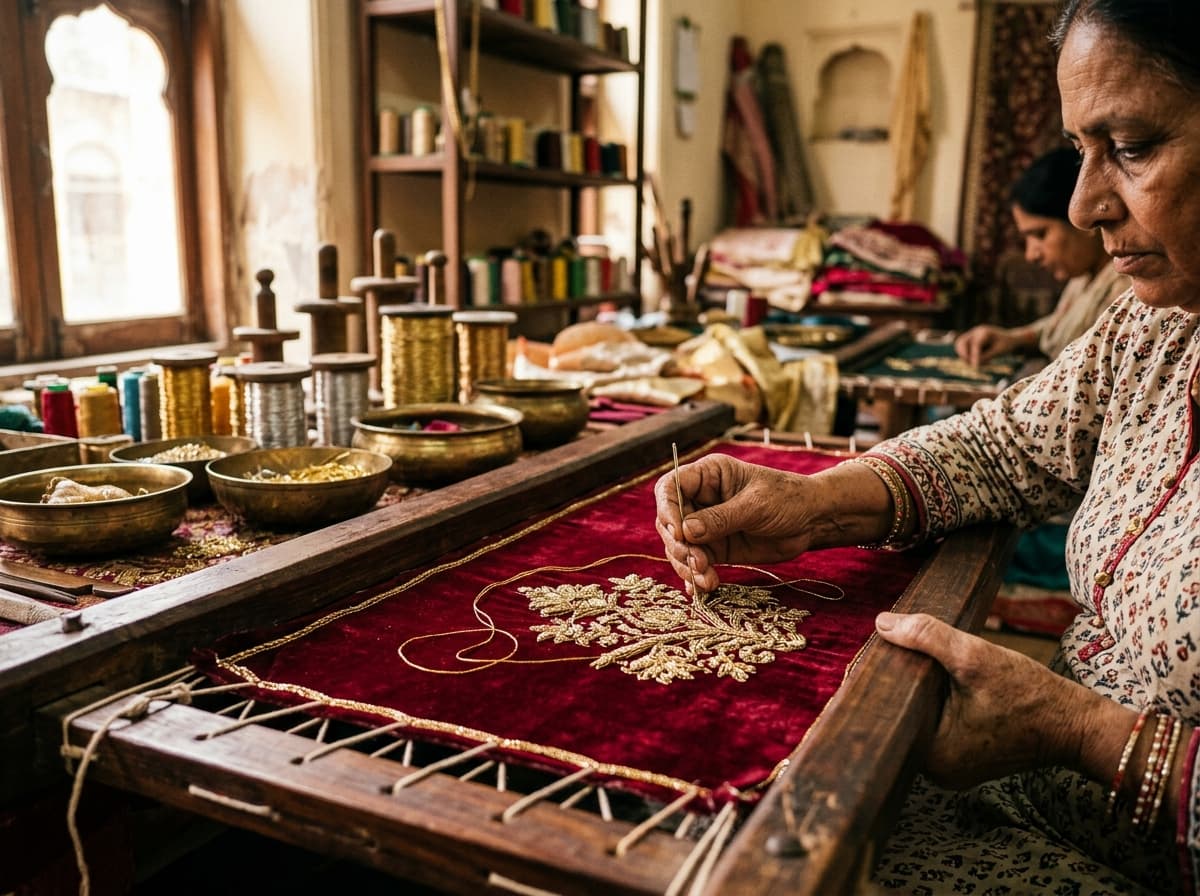
III. The Alizarin Bloom
When the dyed cloth is dipped into copper vats heated over tamarisk wood, the red madder root (Manjishtha) reacts with the alum mordant embedded in the resist print. Suddenly, in a matter of seconds, the muted earthen brown erupts into an intense brick red.
Registered under BLK-049 in the National Register of the Intangible Cultural Heritage of Pakistan, this living chemistry cannot be synthesized in an industrial autoclave. It belongs to the soil.